Tree Disease Treatment in Paramus, NJ
Crownwood Tree Services diagnoses and treats diseased and insect-damaged trees across Paramus, from oaks with leaf scorch to ash threatened by emerald ash borer. Call (551) 351-7420 to have a sick tree evaluated and get a clear treatment plan before the damage spreads.
Tree disease treatment is the diagnosis and management of fungal, bacterial and insect-driven decline in landscape trees using trunk injections, soil treatments, sprays and sanitation pruning. Crownwood Tree Services provides it for homeowners and property managers in Paramus, NJ.
What Tree Disease Treatment Involves and Why It Matters
Tree disease treatment is the work of identifying what is making a tree sick and applying the right control, whether that is a trunk injection, a soil treatment, a targeted spray or the removal of infected wood. Catching a problem while the tree still has healthy canopy is what separates a recoverable tree from one that has to come down.
Trees in Paramus and the surrounding Bergen County suburbs face a steady list of threats. Emerald ash borer has killed untreated ash across New Jersey, bacterial leaf scorch weakens red and pin oaks year after year, and beech leaf disease, anthracnose and needle casts on spruce show up regularly on residential lots.
The symptoms people notice first are usually thinning crowns, early leaf drop, browned leaf edges, cankers, oozing bark or heavy woodpecker activity. Many of these signs overlap, so treating without a diagnosis often wastes money on the wrong product or the wrong timing.
Crownwood Tree Services approaches disease work as a plan rather than a one-time spray. Each tree gets an honest call on whether it can be saved, a treatment matched to the specific pathogen or pest, and a follow-up schedule. When a tree is too far gone, the crew says so and explains the safest option, so you are not paying for treatments that will not change the outcome.
How Is a Diseased Tree Diagnosed and Treated?
Tree disease treatment at Crownwood Tree Services starts with confirming the cause, because the treatments for a fungus, a bacterium and a boring insect are completely different. The arborist examines leaves, bark, the root flare and the pattern of canopy decline, and when symptoms are ambiguous, samples can be sent to a university plant diagnostic lab for confirmation.
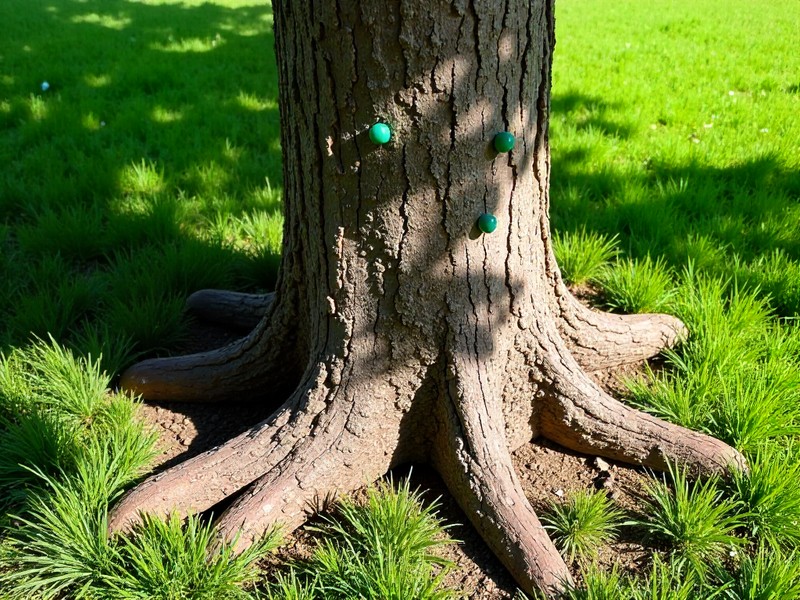
Trunk injection is the most common method for high-value shade trees. Small ports are drilled into the root flare and a measured dose of insecticide, fungicide or antibiotic is delivered directly into the vascular system, with no drift onto lawns, gardens or neighboring yards. Injections are used for emerald ash borer protection, bacterial leaf scorch suppression and several canker and wilt diseases.
Soil drenches and soil injections suit smaller trees and evergreens where trunk injection is impractical. Foliar sprays are reserved for leaf diseases such as apple scab and anthracnose, and they are timed to bud break and early leaf expansion, when fungicides actually protect new growth.
Cultural treatment is included in every plan because chemistry alone rarely fixes a stressed tree. That can mean sanitation pruning of infected limbs with tools disinfected between cuts, pulling mulch away from the trunk, deep root fertilization based on soil conditions, and air spading to relieve compacted soil around the roots.
Timing drives results. Most injections are applied from late spring through early summer, when trees are actively moving water, while dormant oil and some fungicide applications happen in early spring. Many products last one to two years, so a single visit is usually followed by a planned retreatment cycle.
A typical treatment visit for one to three trees takes one to three hours. Visible improvement usually shows over the following growing season, and some diseases, such as bacterial leaf scorch, are managed long term rather than cured. Every pesticide application is made by licensed applicators, as New Jersey requires for commercial work.

What Early Treatment of a Sick Tree Accomplishes
Saves Mature Shade Trees
A mature oak or maple takes decades to replace, and removal plus replanting often costs more than several years of treatment. Treating disease while the canopy is still largely healthy gives the tree a realistic chance to recover and keep providing shade, privacy and value to your property.
Treatment Matched to Diagnosis
Every product and method is chosen for the specific pathogen or pest confirmed on your tree. That avoids paying for broad sprays that do nothing against a bacterial disease or a boring insect, and it keeps chemical use limited to what the tree actually needs to respond.
Contained, Low-Drift Applications
Trunk and soil injections place material inside the tree or root zone instead of spraying it into the air. Children, pets, vegetable gardens and neighboring yards are not exposed to drift, which matters on the closely spaced residential lots common in northern New Jersey suburbs.
Slows Spread to Nearby Trees
Many diseases and pests move from tree to tree through insects, root grafts or airborne spores. Removing infected wood and protecting healthy neighbors early limits how many trees are affected, which can prevent losing a whole row of ash, elm or oak over a few seasons.
Reduces Hazard Limb Risk
Diseased trees drop dead branches and develop decay that weakens limbs over driveways, roofs and sidewalks. Combining treatment with removal of infected deadwood lowers the chance of unexpected limb failure during storms and gives a clearer picture of how structurally sound the tree remains.
Clear Save-or-Remove Answer
Not every sick tree is worth treating, and an honest assessment saves money either way. You get a straightforward recommendation based on how much canopy is affected, the disease involved and the tree's location, so you can choose between ongoing treatment and planned removal with real information.
Steps in a Tree Disease Treatment Program
Site Visit and Symptom Review
An arborist walks the property, inspects the affected tree and nearby trees of the same species, and asks when symptoms started and about recent construction, watering habits and past treatments.
Diagnosis and Lab Confirmation
The cause is identified from leaf, bark and canopy evidence. Unclear cases are sampled for laboratory testing before any product is applied, so treatment targets the real problem.
Written Treatment Plan
You receive the diagnosis, recommended method, seasonal timing window, retreatment schedule and cost per tree, along with an honest prognosis and the removal alternative where it applies.
Application and Sanitation Work
Licensed applicators perform injections, drenches or sprays in the correct seasonal window and prune out infected limbs, disinfecting tools between cuts and hauling diseased material off the property.
Follow-Up Monitoring
The tree is rechecked the following season to measure canopy response, adjust the plan if needed and schedule retreatment before protection lapses.

What Paramus Homeowners Ask About Treating Sick Trees
Common questions about tree disease treatment
Tree disease treatment in Paramus typically runs from about $150 to $600 per tree per application, depending on trunk diameter, the product required and the method. Large oaks needing injections sit at the higher end, while a single foliar spray on an ornamental costs less. Multi-year programs and several trees treated in one visit usually lower the per-tree cost.
A diseased tree can usually be saved when less than about a third to half of its canopy is affected and the trunk and root flare are sound. Trees with extensive dieback, major trunk decay or advanced emerald ash borer damage are generally better removed. The arborist gives a specific prognosis after diagnosis rather than a guess.
Treating a tree on private property with injections, sprays or pruning generally does not require a municipal permit. Permits can come into play if a diseased tree must be removed, since some Bergen County municipalities regulate removal, or if the tree stands in a street right-of-way. Pesticide applications must be made by a New Jersey licensed applicator, which the crew handles.
The best treatment window for most tree diseases in northern New Jersey is spring through early summer, when trees are leafed out and moving water efficiently. Leaf-disease fungicides must go on around bud break, and emerald ash borer injections work best in late spring. Booking a diagnosis in late winter or early spring secures a spot in that window.
Infected branches and debris removed during treatment are hauled away the same day rather than left on site or chipped into your mulch beds. Some pathogens survive in wood and fallen leaves, so diseased material is kept separate from clean chips. Lawn areas are raked, and injection ports are small enough to seal naturally as the tree grows.
Most tree disease treatment needs only hand-carried equipment, so a standard gate opening is enough for injections, soil drenches and sprays. Sanitation pruning in a tall canopy may require a compact lift or climbing gear, which can be planned around fences, patios and septic areas. Bucket trucks are only needed when large infected limbs must come down.
Trunk injections are among the most contained ways to treat a tree because the product goes directly into the trunk instead of into the air. Families and pets typically only need to stay clear during the application itself. Product labels are followed exactly, and you are told which material was used and any precautions for edible plants nearby.
Results from tree disease treatment usually appear over the next growing season as fuller leaf-out and less dieback. Emerald ash borer protection commonly lasts about two years per injection, while bacterial leaf scorch and many fungal diseases need annual or every-other-year treatment. Some conditions are managed long term rather than cured, and the schedule is set in your written plan.
Service Areas
We proudly serve these locations
Need Tree Disease Treatment in Paramus, NJ?
Tell us about the tree and we'll walk the property and give you a clear quote.
Call (551) 351-7420Last updated