
Emergency Tree Service in Paramus, NJ for Storm Damage
Crownwood Tree Services responds to fallen, split and dangerously leaning trees across Paramus, NJ. Call (551) 351-7420 and a crew will assess the hazard, make the property safe and clear the damage so you can get back into your home, driveway or yard.
Emergency tree service is the urgent removal or stabilization of trees and limbs that have fallen, split or become unsafe, typically after storms. Crownwood Tree Services handles emergency calls for homeowners and property managers in Paramus, NJ, clearing hazards from roofs, driveways and vehicles.
What Counts as a Tree Emergency?
Emergency tree service in Paramus covers any tree or limb that has fallen, cracked or shifted in a way that threatens people, buildings, vehicles or utility lines. The work is about removing an immediate danger, which makes it different from scheduled trimming or a planned removal.
The most common emergencies follow thunderstorms, nor'easters and heavy wet snow or ice. Typical calls include a trunk resting on a roof, a large limb hanging over a bedroom, a tree blocking the only driveway out, or a root plate lifting after saturated soil gives way. A partially failed tree can be more dangerous than one already on the ground, because it may finish falling without warning.
Fast action limits secondary damage. A tree left on a roof lets rain into the attic, and a hung-up limb can drop onto anyone walking beneath it. Clearing the load quickly protects the structure and makes it possible to document the damage for an insurance claim.
Crownwood Tree Services brings rigging gear, chainsaws and loading equipment sized for residential lots, along with crews who understand how a stressed tree behaves. The goal on every emergency call is the same: make the site safe first, explain what you need to decide, and leave the property clear and usable.
How Crews Remove a Fallen or Hazardous Tree Safely
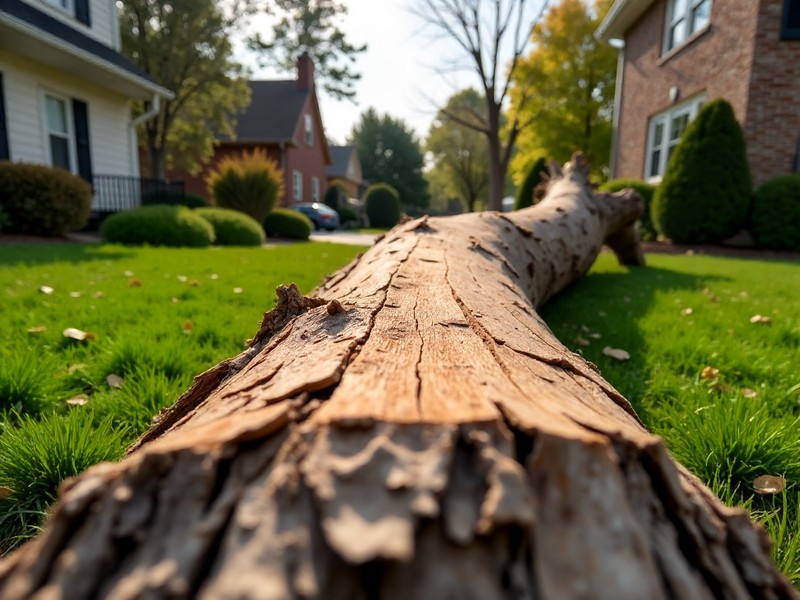
Crownwood Tree Services removes fallen and hazardous trees by first securing the site, then taking the tree apart in controlled sections rather than pulling it off in one piece. Wood under tension from a storm can spring or roll when cut, so each cut is planned around where the weight will move.
The first visit focuses on stabilization. That can mean removing a limb resting on a roof, cutting a tree off a car, or clearing enough of a driveway for vehicles to get out. If any part of the tree touches or sits near electric wires, the crew keeps clear and the electric utility is contacted, since line work must be handled by the utility or line-clearance qualified workers.
For trees lying on structures, climbers or a lift work from the top down. Sections are tied off with ropes and lowered through friction devices so nothing drops onto the roof again. Where access allows, a crane may lift heavy trunk pieces clear of the house in a few large picks, which reduces the time weight sits on rafters.
Equipment usually includes chainsaws, rigging lines and blocks, a chipper, and a loader or grapple truck for logs. On tight Paramus lots with fences and narrow side yards, smaller track machines and ground mats help protect lawns and pavers.
A standard emergency job includes cutting and removing the hazard, chipping brush, and hauling or stacking the wood as you prefer. Stump grinding, tarping a damaged roof and final removal of a standing but damaged tree can be done the same day or scheduled separately once the danger is gone.
Timelines vary with the size of the tree and storm demand. A single limb off a roof may take one to three hours, while a large tree on a house can take a full day. After widespread storms, the most dangerous calls involving homes and blocked exits are handled first, and lower-risk cleanup is booked in the following days.
What Fast Storm Damage Response Protects
Stops Further Structural Damage
Removing a tree from a roof or wall quickly ends the load on rafters and framing and lets the opening be covered before more rain gets in. Every hour a heavy trunk sits on a house raises the chance of interior water damage, cracked ceilings and a larger repair bill.
Removes Hidden Fall Hazards
Storms leave behind hung-up limbs, split leaders and trees with lifted roots that may fail days later. A trained crew identifies these hidden hazards during the visit and removes or reduces them, so the yard, driveway and walkways are safe for family members, neighbors and visitors to use again.
Restores Access to Your Property
A fallen tree across a driveway or front walk can trap cars and block emergency vehicles. Clearing a usable path is often the first task on site, letting you get to work, school or appointments while the remaining wood and debris are cut, chipped and hauled away.
Supports Your Insurance Claim
Insurers generally want evidence of how a tree fell and what it damaged. The crew can photograph the scene before cutting and provide a written description of the work and cost, giving you clear documentation to submit alongside your own photos and the adjuster's inspection.
Controlled Rigging Protects Property
Lowering sections with ropes and friction devices, instead of dropping them, keeps wood off roofs, decks, fences and gardens. This careful rigging matters most when a tree is wedged against a house, because an uncontrolled cut can shift the weight and cause more damage than the storm.
Complete Debris Cleanup
Emergency work leaves behind branches, sawdust and broken wood. Brush is chipped on site, logs are hauled or stacked for firewood at your request, and the area is raked and blown off so the yard is left clean rather than half-finished after the hazard itself is gone.
From First Call to Cleared Storm Damage
Call and Describe the Hazard
Call (551) 351-7420 and explain what fell, what it hit, and whether wires are involved. Photos help the crew bring the right equipment. Stay clear of the tree and any downed lines while you wait.
On-Site Safety Assessment
The crew inspects the tree, checks for wires, tension in the wood and structural damage, and marks off a safe zone. You get a clear explanation of what needs to happen now and what can wait.
Price and Scope Agreement
Before cutting begins, you receive a price for the emergency work and any optional items such as stump grinding or wood removal. Nothing proceeds until you approve the scope.
Stabilize and Remove the Tree
Limbs and trunk sections are cut in a planned sequence and lowered with rigging or lifted by crane. Weight comes off the structure first, then the remaining wood is brought to the ground.
Chip, Haul and Clean Up
Brush is chipped, logs are hauled or stacked, and the work area is raked and blown clear. The crew walks the property with you to confirm the hazard is gone.
Follow-Up Recommendations
Nearby trees that may have been weakened in the same storm are noted, along with any stump or replanting work. Non-urgent items can be scheduled at regular rates.
Emergency Tree Service Questions From Paramus Homeowners
Common questions about emergency tree
Emergency tree service in Paramus typically costs more than scheduled work because of urgency, risk and after-hours labor. Clearing a single fallen limb may run a few hundred dollars, while removing a large tree from a house with rigging or a crane can reach several thousand. A firm price is given on site before any cutting starts.
Homeowners insurance commonly covers tree removal when a tree damages a covered structure such as a house, garage or fence, though many policies cap the removal amount. Trees that fall without hitting anything are often not covered. Check your policy, photograph the damage before work begins, and keep the written invoice for your claim.
Emergency removal of a tree posing an immediate danger is generally allowed to proceed without waiting for a standard permit, but local rules still apply. Paramus residents should confirm requirements with the borough, especially for trees near the street, and keep photos showing the hazard. The crew can advise on documentation for your situation.
Response time for emergency tree calls depends on storm volume and how dangerous the situation is. Trees on occupied homes, blocked exits and threats to people are handled first. After widespread Bergen County storms, lower-risk cleanup such as limbs in the backyard may be scheduled for the following days once urgent calls are cleared.
A tree touching power lines should be treated as energized, so stay at least 30 feet away and keep others clear. Report it to the electric utility right away. Tree crews without line-clearance qualifications cannot work near energized lines, so the utility typically de-energizes or clears the lines before the rest of the tree is removed.
A storm-damaged tree can sometimes be saved when the trunk is sound, the root plate has not lifted and less than about a third of the crown is lost. Broken limbs are cut back to clean points to help the tree recover. Trees with split trunks, major root failure or heavy lean toward a house usually need removal.
Equipment can reach most backyard trees in Paramus, even behind fences or narrow side yards. Climbers and rope rigging need very little access, while compact track machines fit through gates around three feet wide. Cranes can lift sections over a house when ground access is blocked, and mats protect lawns from ruts.
Cleanup is included in emergency tree service, covering chipping of branches, hauling of logs and raking of the work area. Wood can be left cut to firewood length if you prefer. Stump grinding and roof tarping are usually priced separately and can be done the same day or scheduled once the immediate danger is resolved.
Sources
- Tree Care Safety and Health Topic, Occupational Safety and Health Administration — Tree work near power lines poses serious hazards
Service Areas
We proudly serve these locations
Need Emergency Tree in Paramus, NJ?
Tell us about the tree and we'll walk the property and give you a clear quote.
Call (551) 351-7420Last updated