
Tree Cabling and Bracing in Paramus, NJ
Crownwood Tree Services installs cables and bracing rods that support split trunks, weak crotches and heavy limbs on mature trees in Paramus. If a valuable tree is cracking or leaning but still healthy, our crew can assess whether hardware support will keep it standing safely. Call (551) 351-7420 to schedule an inspection.
Tree cabling and bracing is the installation of flexible cables and steel rods in a tree's canopy and trunk to limit movement at weak branch unions, splits and heavy limbs. It is used on structurally weak but healthy trees, extending their safe life for property owners in Paramus, NJ.
What Does Tree Cabling and Bracing Do?
Tree cabling and bracing holds a weak tree together by limiting how far its limbs and stems can move apart in wind, snow and ice. Cables are strung between major limbs high in the crown, and threaded steel rods are installed through the wood where a split or weak union has formed. The tree keeps growing around the hardware instead of being cut down.
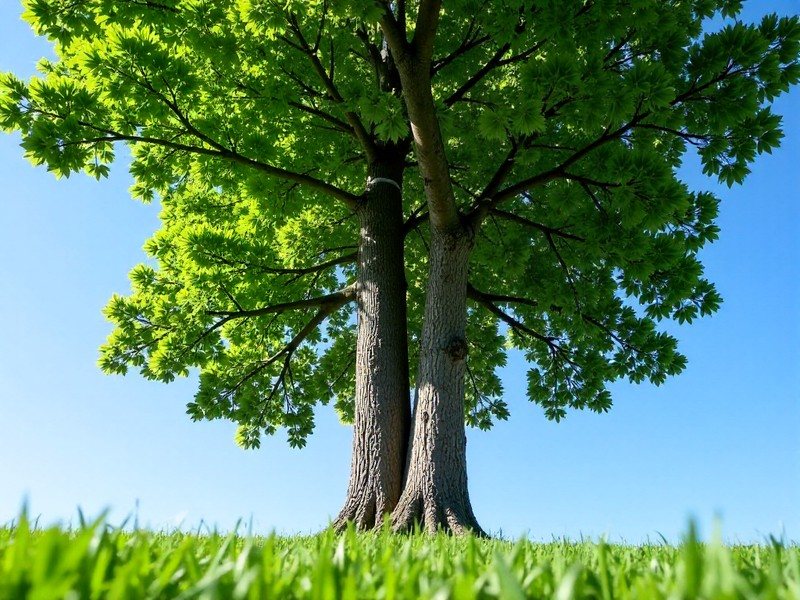
The work solves a specific set of structural problems. Twin trunks with bark trapped in a tight V-shaped crotch, old cracks that open and close in storms, long horizontal limbs reaching over a roof or driveway, and heavy leaders on mature oaks and maples are the most common candidates in established neighborhoods.
Cabling is not a cure for a dying or rotten tree, and it does not replace pruning. It works best on a sound tree with one or two clear structural flaws, usually combined with a light crown reduction that takes weight off the limbs being supported. A tree with extensive decay at the base or in the union is a poor candidate, and hardware would only delay an unavoidable failure.
Crownwood Tree Services evaluates every tree before recommending hardware and states plainly when removal is the safer option. Installations follow the widely used industry standard for supplemental support systems, and each system is recorded so it can be inspected and adjusted as the tree grows over the following years.

How Cables and Bracing Rods Are Installed
Crownwood Tree Services completes most residential tree cabling and bracing jobs in Paramus in a single visit, beginning with a close look at the union, crack or limb that needs support. The climber checks for decay, cavities and fungal growth, because any hardware must anchor into solid wood to hold under load.
Cabling uses either static steel cable or dynamic synthetic line. Extra-high-strength galvanized steel cable, anchored with eye bolts or lag hooks, suits heavy limbs and trees with existing cracks. Dynamic systems use a braided synthetic rope that stretches slightly, allowing natural sway while catching sudden loads, and they install without drilling into the limb.
Cables are typically placed about two-thirds of the distance from the weak union to the ends of the limbs. Mounting them high gives the most leverage, and the line is tensioned so it is snug in calm weather rather than pulling the limbs together. Larger trees may need several cables arranged in a triangle or hub pattern so that no single limb is left unsupported.
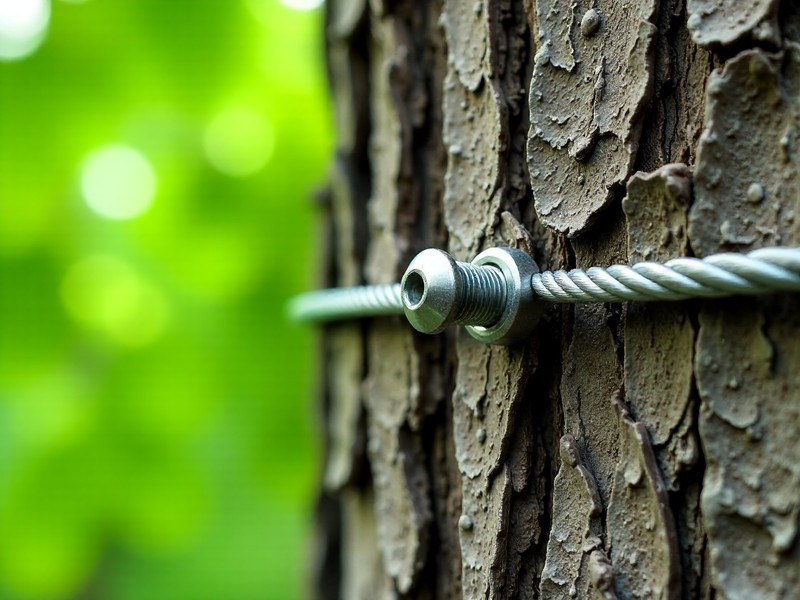
Bracing addresses the trunk or union itself. Threaded steel rods are installed through the wood just above or below a split or weak crotch, secured with washers and nuts, and set so the tree can grow callus tissue over them. Rods are often paired with a cable higher in the crown for combined support.
Most jobs include a light reduction of the supported limbs to cut wind load, cleanup of all cuttings and a written record of the hardware type and position. Equipment is mostly climbing gear, a drill with long auger bits and hand tools, so lawns, gardens and driveways see very little disturbance.
A single cable on a mid-sized tree usually takes two to three hours. Multi-cable systems with bracing rods on a large oak can take most of a day. Inspections follow every year and after major storms; steel systems are checked for wear and loosening, while dynamic lines are replaced on the manufacturer's schedule, often around eight to ten years.
Advantages of Supporting a Structurally Weak Tree
Keeps Mature Trees Standing
Tree cabling and bracing lets a large, healthy tree with one structural flaw stay in the yard instead of being removed. A mature oak or maple takes decades to replace, and supporting it preserves the shade, privacy and property value it already provides while the tree continues to grow normally.
Reduces Storm Failure Risk
Cables and rods limit how far weak limbs and split trunks can spread apart during high wind, wet snow and ice loading. That reduces the chance of a sudden break over a roof, driveway, fence or play area, though no system can guarantee a tree will survive every severe storm.
Slows Existing Cracks
A crack that flexes open in every storm tends to lengthen and invite decay. Bracing rods hold the two sides together so the wood stops working against itself, giving the tree a chance to form callus tissue and wound wood along the damaged area over the following seasons.
Costs Less Than Removal
Supporting a large tree with cables usually costs a fraction of removing it, grinding the stump and planting a replacement. For owners who want to keep a specimen tree, cabling is often the more economical path, provided the tree is sound enough to justify the hardware and annual inspections.
Minimal Disturbance to Property
Installation is done by a climber with hand tools and a drill rather than heavy machinery. Most jobs need no bucket truck or crane, so lawns, garden beds, patios and driveways are left essentially untouched, and backyard trees with narrow gate access can still be supported.
Steps in a Cabling and Bracing Job
Structural Inspection
Tree cabling and bracing starts with an inspection of the union, crack or limb in question, including sounding the wood and checking for decay, cavities and fungal growth to confirm the tree can hold hardware.
Recommendation and Quote
You receive a written plan covering the cable type, number of anchors, any bracing rods and pruning needed, along with a fixed price. If removal is the safer option, the quote says so.
Crown Reduction
Before hardware goes in, the climber lightens the supported limbs with selective reduction cuts to lower wind load and reduce the strain the cables will carry.
Hardware Installation
Anchors, cables and rods are installed at the correct height and angle, tensioned to stay snug in calm weather, and checked for alignment before the climber descends.
Cleanup and Annual Follow-Up
All cuttings are removed, the hardware layout is documented, and the tree is scheduled for a yearly inspection plus a check after any major storm.
Tree Cabling Questions From Paramus Homeowners
Common questions about tree cabling & bracing
Tree cabling in Paramus typically runs from a few hundred dollars for a single cable on a mid-sized tree to well over a thousand for a large oak needing several cables, bracing rods and pruning. Price depends on tree height, number of anchors, hardware type and access. Crownwood Tree Services provides a fixed written quote after inspecting the tree.
A cracked tree can often be saved with cabling and bracing when the wood around the split is solid and the tree is otherwise healthy. Extensive decay in the union, a trunk that has shifted, or cracks reaching into the root flare usually make removal the safer option. An on-site inspection determines which applies to your tree.
Cabling a tree on private property generally does not require a removal permit in Paramus, because no tree is being taken down. Trees in the borough right-of-way between the sidewalk and street are different, and work on them needs municipal approval. Homeowner association rules may also apply, so checking those before scheduling is worthwhile.
Properly installed cabling hardware causes small, limited wounds that a healthy tree seals with callus growth over time. Anchor holes are sized to the bolt and placed in sound wood to limit decay. For limbs that should not be drilled, dynamic synthetic systems wrap around the branch instead and require no holes at all.
Steel tree cables can last many years but need yearly inspection for wear, loosening and the tree growing around them. Dynamic synthetic cables are generally replaced on the manufacturer's schedule, often around eight to ten years. Every system should also be checked after major storms, since one heavy event can stretch or damage hardware.
Tree cabling in Paramus is usually scheduled within one to two weeks of the inspection, depending on weather and workload. A tree with an actively spreading crack over a house or driveway is prioritized. Most residential installations are completed in a single visit lasting a few hours, and you do not need to be home if gate access is arranged.
Backyard trees without truck access can almost always be cabled, because the work is done by a climber using ropes, hand tools and a drill. A standard side gate is enough to bring in gear. No bucket truck or heavy machinery is needed for most jobs, so lawns, fences and landscaping are left undisturbed.
Cleanup after tree cabling and bracing includes removing every branch and cutting from the pruning that accompanies the installation, raking the work area and hauling debris away. Because the job produces far less material than trimming or removal, the yard is usually left looking the same as before, with only the hardware visible high in the canopy.
Service Areas
We proudly serve these locations
Need Tree Cabling & Bracing in Paramus, NJ?
Tell us about the tree and we'll walk the property and give you a clear quote.
Call (551) 351-7420Last updated